

Meniscus Tear
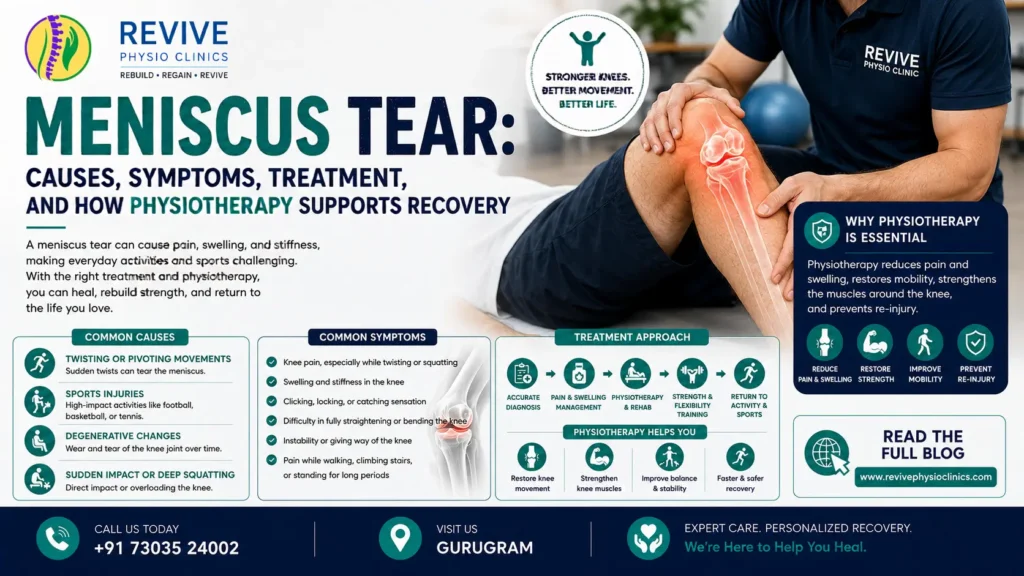
The meniscus is a C-shaped piece of cartilage in your knee that acts as a cushion between the thigh bone (femur) and shin bone (tibia). It absorbs shock, distributes weight, and helps keep the knee stable. A meniscus tear is one of the most common knee injuries, affecting athletes, active adults, and even older individuals due to age-related wear and tear.
Whether your injury is treated with or without surgery, physiotherapy plays a crucial role in reducing pain, restoring movement, and helping you return to your daily activities safely.
At Revive Physio Clinic, we provide customized meniscus rehabilitation programs designed to promote healing and restore knee function.
What Is a Meniscus Tear?
Each knee has two menisci—one on the inside (medial meniscus) and one on the outside (lateral meniscus). These cartilage structures help absorb impact and protect the knee joint.
A meniscus tear occurs when the cartilage is damaged due to twisting, sudden movements, or gradual degeneration. The severity of the tear can vary from a small tear to a large, complex injury.
Common Causes of a Meniscus Tear
Several factors can lead to a meniscus tear, including:
- Twisting the knee while the foot is planted
- Sudden changes in direction during sports
- Squatting with heavy weights
- Direct impact on the knee
- Age-related cartilage degeneration
- Repetitive knee stress
- Falls or accidents
Sports such as football, basketball, tennis, badminton, and cricket commonly involve movements that increase the risk of a meniscus injury.
Symptoms of a Meniscus Tear
Common symptoms include:
- Pain along the knee joint
- Swelling within a few hours of injury
- Difficulty bending or straightening the knee
- A locking or catching sensation
- Knee stiffness
- Feeling that the knee may give way
- Pain while squatting or climbing stairs
- Reduced range of motion
If you experience these symptoms, consult a healthcare professional for an accurate diagnosis.
How Is a Meniscus Tear Diagnosed?
A physiotherapist or orthopedic specialist may use:
- Physical examination
- McMurray Test
- Thessaly Test
- Joint line tenderness assessment
- MRI scan
- X-rays (to rule out fractures)
An accurate diagnosis helps determine whether conservative treatment or surgery is the best option.
How Physiotherapy Helps
Physiotherapy is essential for recovering from a meniscus tear, whether managed conservatively or after arthroscopic surgery.
At Revive Physio Clinic, your personalized treatment plan may include:
- Pain and swelling management
- Manual therapy
- Knee joint mobilization
- Range-of-motion exercises
- Quadriceps strengthening
- Hamstring strengthening
- Hip and core strengthening
- Balance and proprioception training
- Gait correction
- Functional movement training
- Return-to-sport rehabilitation
Our rehabilitation program focuses on restoring knee stability, improving strength, and reducing the risk of future injuries.
Stages of Meniscus Rehabilitation
Phase 1: Reduce Pain and Swelling
- Control inflammation
- Restore gentle knee movement
- Improve walking ability
Phase 2: Restore Strength
- Strengthen the muscles around the knee
- Improve flexibility
- Begin balance exercises
Phase 3: Functional Recovery
- Improve coordination
- Increase endurance
- Restore normal movement patterns
Phase 4: Return to Activity
- Agility training
- Functional strengthening
- Sport-specific exercises
- Injury prevention strategies
Recovery time depends on the type and severity of the tear, your age, and the chosen treatment approach.
Tips to Prevent Meniscus Injuries
Protect your knees with these healthy habits:
- Warm up before exercise.
- Strengthen your leg and core muscles.
- Maintain flexibility in the hips and knees.
- Wear appropriate footwear.
- Use proper techniques during sports and lifting.
- Avoid sudden twisting movements.
- Maintain a healthy body weight to reduce stress on your knees.
Strong muscles and good movement mechanics help reduce the risk of knee injuries.
Why Choose Revive Physio Clinic?
At Revive Physio Clinic, we use evidence-based physiotherapy techniques and individualized rehabilitation plans to help patients recover from knee injuries effectively. Our experienced physiotherapists monitor your progress at every stage, ensuring safe recovery and optimal knee function.
Whether your goal is to walk without pain, return to sports, or regain confidence in your movement, we are here to support you throughout your recovery journey.
When Should You Visit a Physiotherapist?
Book an appointment if you experience:
- Persistent knee pain
- Swelling after a knee injury
- Difficulty bending or straightening the knee
- Knee locking or clicking
- Instability while walking
- Pain during sports or exercise
Early physiotherapy intervention can improve recovery outcomes and help prevent long-term knee problems.
Restore Your Knee Health with Expert Physiotherapy
A meniscus tear doesn’t have to keep you from enjoying an active lifestyle. With expert physiotherapy, you can reduce pain, rebuild strength, and return to the activities you love.
If you’re experiencing knee pain or recovering from a meniscus injury, trust the experienced team at Revive Physio Clinic for personalized care and effective rehabilitation.
Book Your Consultation Today!
📞 Call: +91 73035 24002
🌐 Website: www.revivephysioclinics.com
📍 Location: Gurugram
.
