

Piriformis Syndrome
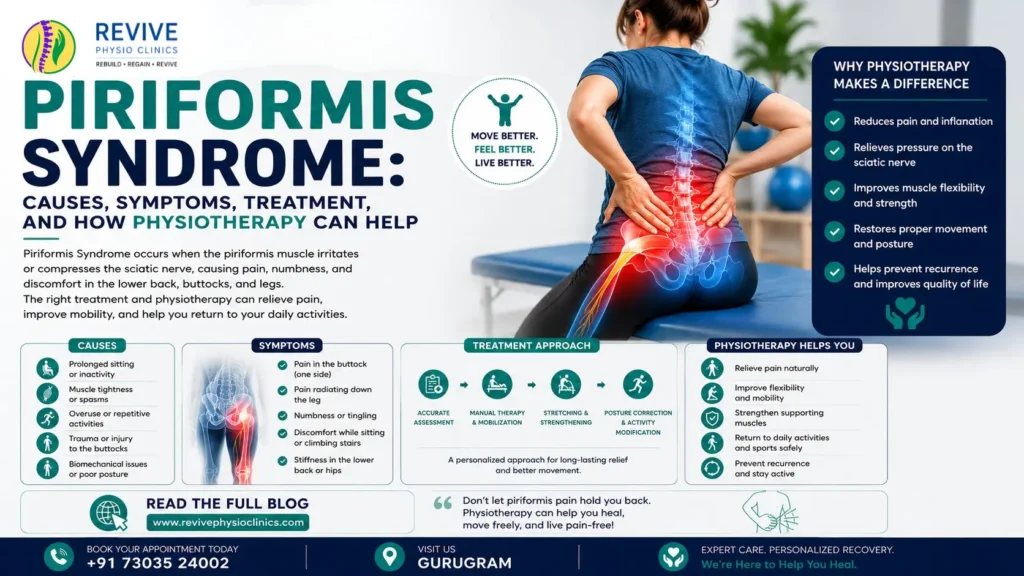
Pain in the buttock that travels down the leg is often mistaken for sciatica. However, in some cases, the underlying problem may be Piriformis Syndrome—a condition involving the piriformis muscle located deep in the buttock.
The piriformis muscle helps with hip movement and stability. When it becomes tight, irritated, or goes into spasm, it can irritate the nearby sciatic nerve and cause pain that may extend into the leg.
At Revive Physio Clinic, physiotherapy can help identify the contributing factors behind piriformis-related pain and provide a personalized rehabilitation program to improve mobility and function.
What Causes Piriformis Syndrome?
Piriformis Syndrome may develop due to several factors, including:
- Prolonged sitting
- Repetitive running or walking
- Overuse during sports
- Tight hip muscles
- Weak gluteal muscles
- Poor posture
- Direct trauma to the buttock
- Muscle imbalance around the hip and pelvis
- Sudden increases in physical activity
People who spend long hours sitting or participate in repetitive lower-body activities may be more susceptible.
Common Symptoms
Symptoms can vary from person to person, but commonly include:
- Deep pain in the buttock
- Pain that may travel down the back of the thigh
- Tingling or numbness in the leg
- Pain that worsens after prolonged sitting
- Discomfort while climbing stairs
- Pain during running or walking
- Hip stiffness
- Difficulty sitting comfortably
Because these symptoms can resemble other conditions such as lumbar spine problems, a proper assessment is important.
How Physiotherapy Helps
At Revive Physio Clinic, your physiotherapist will assess your posture, hip mobility, muscle strength, movement patterns, and symptoms before creating a treatment plan.
Depending on your condition, treatment may include:
- Manual therapy
- Soft tissue techniques
- Piriformis and hip stretching
- Gluteal strengthening exercises
- Core strengthening
- Hip mobility exercises
- Posture correction
- Movement retraining
- Activity modification
- Home exercise program
The objective is to reduce irritation, improve hip and pelvic movement, strengthen supporting muscles, and help prevent recurring symptoms.
Exercises That May Help
A physiotherapist may recommend exercises such as:
- Piriformis stretch
- Hip flexor stretch
- Glute bridges
- Clamshell exercises
- Side-lying leg raises
- Hip rotation exercises
- Core stabilization exercises
The appropriate exercises depend on the cause and severity of your symptoms. Performing exercises incorrectly or aggressively may increase discomfort, so professional guidance is recommended.
Lifestyle Tips for Managing Piriformis Pain
Simple changes can help reduce stress on the hip and buttock muscles:
- Avoid sitting continuously for long periods.
- Take regular movement breaks during desk work.
- Maintain good sitting posture.
- Stretch after prolonged sitting.
- Increase exercise intensity gradually.
- Strengthen your hips and core regularly.
- Use proper technique during sports and workouts.
- Avoid activities that significantly aggravate your symptoms.
Piriformis Syndrome vs. Sciatica
Piriformis Syndrome and sciatica can produce similar symptoms, particularly pain that travels from the buttock toward the leg.
However, sciatica generally involves irritation or compression of the sciatic nerve originating from the lower back, while Piriformis Syndrome involves irritation of the sciatic nerve around the piriformis muscle in the buttock.
Because the symptoms can overlap, professional assessment is important before beginning a specific treatment program.
When Should You See a Physiotherapist?
Consider seeking professional evaluation if:
- Buttock pain persists for several days or keeps returning.
- Pain interferes with sitting, walking, or exercising.
- Symptoms travel into the leg.
- You experience persistent tingling or numbness.
- Hip movement becomes restricted.
- Your symptoms are affecting your daily activities.
Early assessment can help identify contributing factors and guide appropriate rehabilitation.
Why Choose Revive Physio Clinic?
At Revive Physio Clinic, we focus on understanding the factors contributing to your pain rather than simply treating the symptoms. Our physiotherapists use individualized rehabilitation strategies to improve mobility, strength, posture, and functional movement.
Whether your symptoms are related to prolonged sitting, sports activity, muscle tightness, or movement imbalance, our team can help you work toward improved mobility and confidence.
Take the First Step Toward Better Movement
Persistent buttock or leg pain shouldn’t be ignored. With appropriate assessment and physiotherapy, many people can improve their mobility, strength, and ability to perform everyday activities comfortably.
If you’re experiencing symptoms that may be related to Piriformis Syndrome, consult the physiotherapy team at Revive Physio Clinic for a personalized assessment.
Book Your Consultation Today
📞 Call: +91 73035 24002
🌐 Website: www.revivephysioclinics.com
📍 Location: Gurugram
.
