

Rotator Cuff Injury
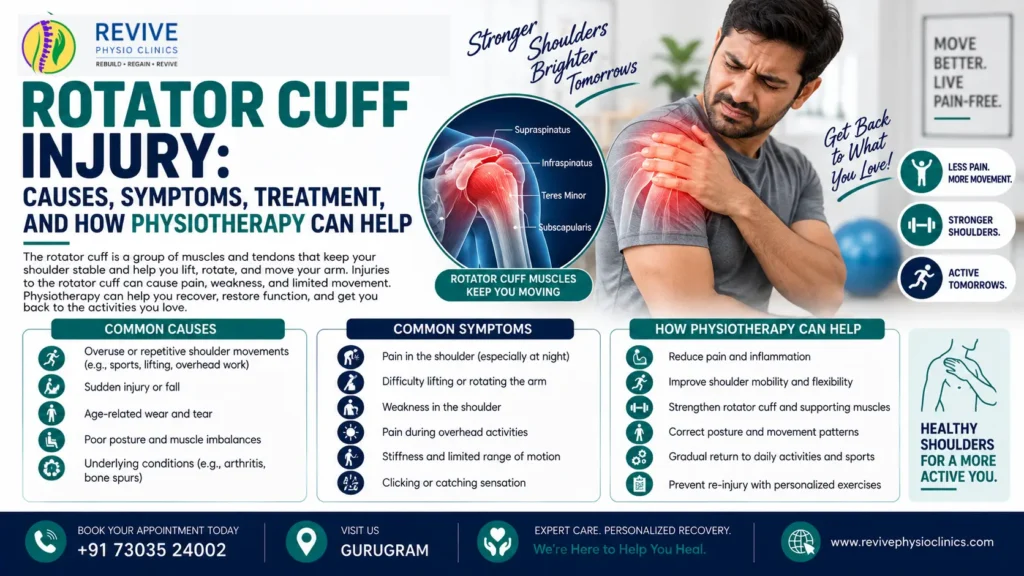
Shoulder pain can make everyday activities such as lifting your arm, reaching overhead, getting dressed, driving, or sleeping uncomfortable. One common cause of shoulder pain is a rotator cuff injury.
The rotator cuff is a group of muscles and tendons that help stabilize the shoulder and allow smooth movement of the arm. When these tissues become irritated, overloaded, or torn, shoulder pain and weakness can develop.
At Revive Physio Clinic, we provide personalized physiotherapy programs to help reduce pain, improve shoulder movement, restore strength, and support a safe return to daily activities.
What Is the Rotator Cuff?
The rotator cuff consists of four muscles and their tendons surrounding the shoulder joint. These muscles play an important role in:
- Stabilizing the shoulder joint
- Lifting the arm
- Rotating the shoulder
- Controlling arm movements
- Supporting overhead activities
Because the shoulder is highly mobile, the rotator cuff plays a crucial role in maintaining stability and movement.
Common Causes of Rotator Cuff Injuries
Rotator cuff problems can develop suddenly after an injury or gradually over time.
Common causes include:
- Repetitive overhead activities
- Sports injuries
- Heavy lifting
- Falls or accidents
- Poor shoulder mechanics
- Muscle weakness
- Age-related tendon changes
- Repetitive work activities
- Sudden increases in exercise intensity
Sports and occupations involving frequent overhead movements may increase the risk of shoulder problems.
Common Symptoms of a Rotator Cuff Injury
Symptoms can vary depending on the type and severity of the injury.
Common symptoms include:
- Shoulder pain
- Pain while lifting the arm
- Pain during overhead activities
- Shoulder weakness
- Difficulty reaching behind the back
- Pain while sleeping
- Difficulty lying on the affected shoulder
- Clicking or catching sensations
- Reduced shoulder movement
Persistent shoulder pain should be properly assessed to identify the underlying cause.
Types of Rotator Cuff Problems
Rotator cuff conditions can include:
Rotator Cuff Tendinopathy
Irritation or changes affecting the rotator cuff tendons.
Rotator Cuff Tear
A partial or complete tear of one or more rotator cuff tendons.
Shoulder Impingement-Related Pain
Pain that may occur during certain shoulder movements and can involve multiple structures around the shoulder.
A professional assessment can help determine the most appropriate treatment approach.
How Physiotherapy Can Help
Physiotherapy is often an important part of managing rotator cuff-related shoulder pain.
At Revive Physio Clinic, your physiotherapist will assess your:
- Shoulder mobility
- Muscle strength
- Movement patterns
- Posture
- Daily activities
- Work or sports requirements
Based on your assessment, your personalized treatment plan may include:
- Pain management strategies
- Manual therapy when appropriate
- Shoulder mobility exercises
- Rotator cuff strengthening
- Shoulder blade stabilization exercises
- Progressive resistance training
- Postural and movement education
- Functional movement training
- Activity modification
- Home exercise programs
The rehabilitation program is gradually progressed according to your symptoms and recovery goals.
Exercises That May Help Strengthen the Shoulder
Depending on your condition, a physiotherapist may recommend:
- Shoulder blade squeezes
- External rotation exercises
- Internal rotation exercises
- Resistance band exercises
- Wall exercises
- Controlled shoulder strengthening
- Upper-back strengthening exercises
The right exercise program depends on the type and severity of your shoulder problem. Exercises should be progressed gradually under professional guidance.
Tips to Protect Your Shoulders
You can help reduce unnecessary stress on your shoulders by:
- Warming up before exercise
- Strengthening the shoulder and upper-back muscles
- Avoiding sudden increases in training intensity
- Using proper lifting techniques
- Taking breaks during repetitive overhead activities
- Maintaining good movement technique
- Following a balanced exercise program
Building shoulder strength gradually can help improve the ability of the joint to handle everyday activities.
When Should You See a Physiotherapist?
Consider seeking professional help if you experience:
- Persistent shoulder pain
- Difficulty lifting your arm
- Increasing shoulder weakness
- Pain affecting your sleep
- Difficulty with work or sports
- Shoulder pain after an injury
- Reduced range of motion
Early assessment can help identify contributing factors and guide an appropriate rehabilitation plan.
Seek Medical Attention Promptly If:
- You cannot move your arm after a significant injury.
- You have severe shoulder deformity.
- There is sudden major weakness after an injury.
- You experience severe swelling or intense pain.
Why Choose Revive Physio Clinic?
At Revive Physio Clinic, we understand that shoulder pain can affect every aspect of your daily life. Our physiotherapists take an individualized approach to understand your symptoms, movement limitations, lifestyle, and recovery goals.
Our treatment programs focus on helping you:
- Reduce shoulder pain
- Improve mobility
- Restore muscle strength
- Improve functional movement
- Return to work and sports safely
- Reduce the risk of recurring problems
Get Back to Comfortable Shoulder Movement
Shoulder pain should not stop you from doing the activities you enjoy. With proper assessment and a structured physiotherapy program, you can work toward stronger, more comfortable, and more confident movement.
If shoulder pain or weakness is affecting your daily life, visit Revive Physio Clinic for a personalized physiotherapy assessment.
Understanding a Rotator Cuff Injury is essential for effective treatment.
Many people suffer from a Rotator Cuff Injury due to various activities.
Taking care of a Rotator Cuff Injury early on can prevent further complications.
A Rotator Cuff Injury can significantly impact your quality of life.
It’s vital to recognize the symptoms of a Rotator Cuff Injury.
Injuries such as a Rotator Cuff Injury are common among athletes.
Preventing a Rotator Cuff Injury is crucial for active individuals.
Recovery from a Rotator Cuff Injury may take time and patience.
Understanding a Rotator Cuff Injury can lead to better outcomes.
Consult with professionals if you suspect a Rotator Cuff Injury.
The impacts of a Rotator Cuff Injury can be long-lasting.
Understanding the healing process of a Rotator Cuff Injury is beneficial.
Maintaining shoulder health can prevent a Rotator Cuff Injury.
Education on a Rotator Cuff Injury can empower patients.
Always address concerns about a potential Rotator Cuff Injury with professionals.
Physical therapy is often crucial for managing a Rotator Cuff Injury.
Therapists will often focus on a Rotator Cuff Injury during treatment.
A well-structured program can effectively address a Rotator Cuff Injury.
Seek help to ensure proper recovery from a Rotator Cuff Injury.
Book Your Consultation Today
📞 Call: +91 73035 24002
🌐 Website: www.revivephysioclinics.com
📍 Location: Gurugram
.
