

Frozen Shoulder
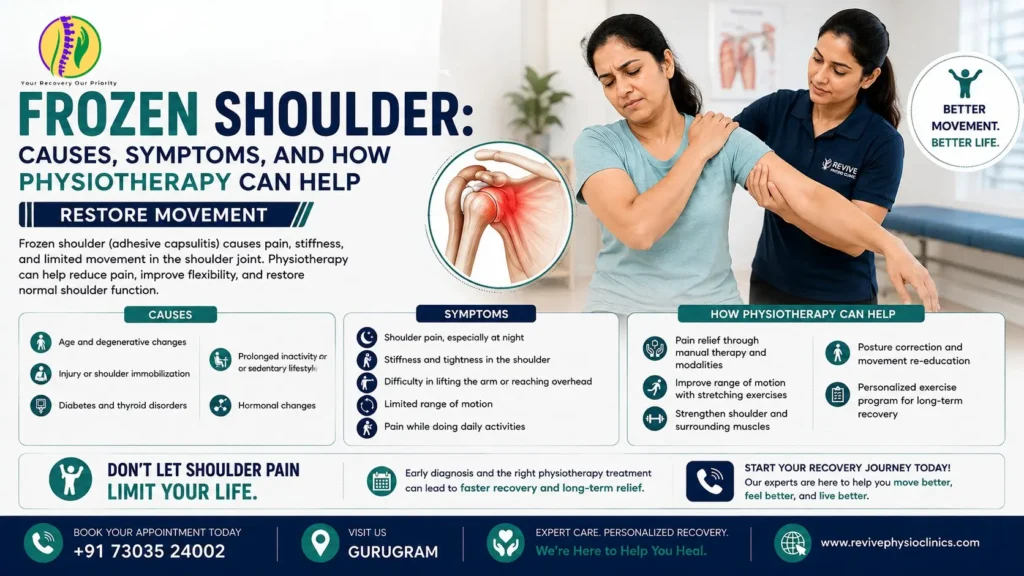
Frozen shoulder, medically known as adhesive capsulitis, is a painful condition that causes stiffness and a gradual loss of movement in the shoulder. Simple activities such as reaching overhead, dressing, combing your hair, or reaching behind your back can become difficult.
The good news is that appropriate physiotherapy can play an important role in managing pain, improving shoulder mobility, and helping patients regain functional movement.
At Revive Physio Clinic, we provide personalized physiotherapy programs based on your symptoms, stage of recovery, and individual mobility needs.
What Is Frozen Shoulder?
Frozen shoulder occurs when the connective tissue surrounding the shoulder joint becomes painful and stiff, leading to restricted movement.
The condition usually develops gradually and can progress through different stages. Recovery may take time, but proper management and rehabilitation can help improve shoulder function.
The Three Stages of Frozen Shoulder
1. Freezing Stage
During this stage, shoulder pain gradually increases, and movement becomes more difficult.
Common symptoms include:
- Increasing shoulder pain
- Pain at night
- Difficulty sleeping on the affected side
- Gradually increasing stiffness
- Difficulty with daily activities
2. Frozen Stage
Pain may reduce for some people, but shoulder stiffness can become more noticeable.
You may experience:
- Significant restriction in shoulder movement
- Difficulty lifting your arm
- Problems reaching behind your back
- Difficulty dressing
- Reduced ability to perform daily activities
3. Thawing Stage
During the thawing stage, shoulder movement may gradually improve.
With appropriate rehabilitation and regular exercises, patients can work toward restoring mobility and function.
Common Causes and Risk Factors
The exact cause of frozen shoulder is not always clear. However, certain factors may increase the risk, including:
- Prolonged shoulder immobility
- Previous shoulder injury
- Surgery affecting the shoulder or arm
- Age-related changes
- Previous shoulder problems
A proper medical and physiotherapy assessment is important to identify the cause of shoulder stiffness.
Common Symptoms of Frozen Shoulder
People with frozen shoulder may experience:
- Persistent shoulder pain
- Increasing stiffness
- Difficulty raising the arm
- Difficulty reaching overhead
- Difficulty reaching behind the back
- Pain while sleeping
- Reduced range of motion
- Difficulty performing everyday activities
The symptoms and severity can vary from person to person.
How Physiotherapy Can Help
Physiotherapy is an important part of managing frozen shoulder.
At Revive Physio Clinic, your physiotherapist will assess your shoulder movement, pain levels, muscle strength, and functional limitations before developing a personalized treatment plan.
Your rehabilitation program may include:
- Pain management techniques
- Gentle joint mobilization
- Manual therapy when appropriate
- Shoulder mobility exercises
- Stretching exercises
- Progressive strengthening
- Postural correction
- Functional movement training
- Home exercise programs
The treatment approach is adjusted according to the stage of your condition and your individual symptoms.
Exercises That May Help Improve Shoulder Mobility
Depending on your condition, your physiotherapist may recommend:
- Pendulum exercises
- Shoulder flexion exercises
- Wall climbing exercises
- Gentle external rotation exercises
- Cross-body stretches
- Shoulder blade exercises
It is important not to force painful movements. Exercises should be performed according to professional guidance and your individual tolerance.
Tips for Managing Frozen Shoulder
You can support your recovery by:
- Following your physiotherapy program consistently
- Performing prescribed exercises regularly
- Avoiding sudden, forceful movements
- Maintaining gentle shoulder movement within your comfort level
- Following advice regarding activity modification
- Maintaining good posture during daily activities
Recovery can take time, so consistency and patience are important.
When Should You See a Physiotherapist?
Consider seeking professional help if you experience:
- Persistent shoulder pain
- Increasing shoulder stiffness
- Difficulty lifting your arm
- Pain affecting your sleep
- Difficulty dressing or performing daily activities
- Reduced shoulder movement
Early assessment can help identify the cause of your symptoms and guide appropriate treatment.
Why Choose Revive Physio Clinic?
At Revive Physio Clinic, we understand how frustrating shoulder pain and restricted movement can be. Our physiotherapists provide individualized rehabilitation programs designed around your symptoms, mobility, and recovery goals.
Our approach focuses on helping you:
- Manage shoulder pain
- Improve mobility
- Restore functional movement
- Build shoulder strength
- Return to daily activities with greater confidence
Restore Your Shoulder Movement with Expert Physiotherapy
Frozen shoulder can make everyday life challenging, but a structured physiotherapy program can help you work toward improved mobility and function.
If shoulder pain and stiffness are affecting your daily activities, visit Revive Physio Clinic for a professional assessment and personalized physiotherapy treatment.
Book Your Consultation Today
📞 Call: +91 73035 24002
🌐 Website: www.revivephysioclinics.com
📍 Location: Gurugram
.
