

Sciatica
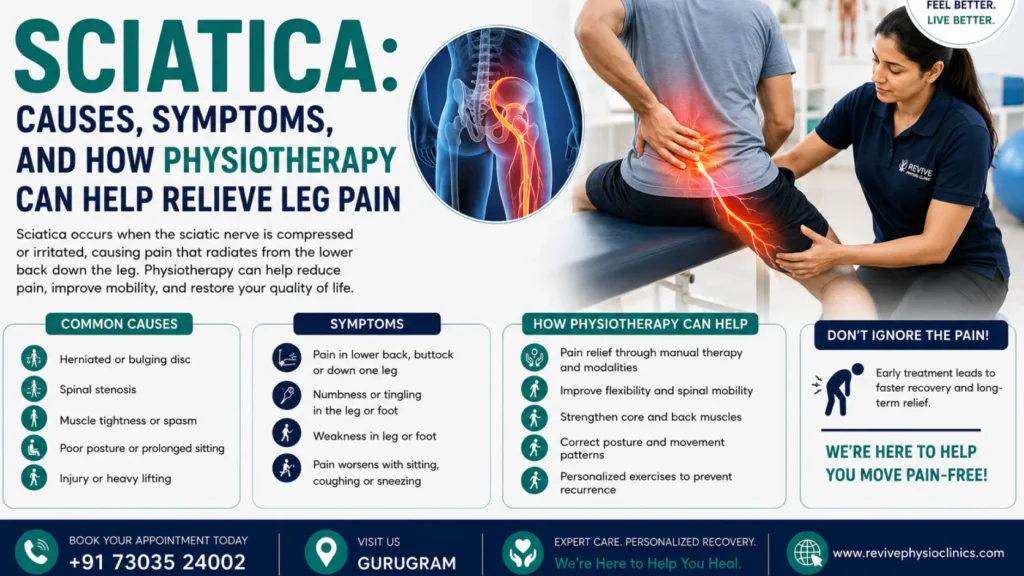
Sciatica is a common condition that can cause pain traveling from the lower back or buttock down into the leg. The pain may range from mild discomfort to severe, sharp, burning, or shooting pain that affects walking, sitting, and everyday activities.
Although many people use the term “sciatica” to describe any leg pain, sciatica specifically refers to symptoms related to irritation or compression affecting the sciatic nerve or its nerve roots.
At Revive Physio Clinic, we provide personalized physiotherapy programs to help manage pain, improve movement, and address the factors contributing to your symptoms.
What Is Sciatica?
The sciatic nerve is the largest nerve in the body. It travels from the lower back through the buttock and down into the legs.
When the nerve or its roots become irritated or compressed, symptoms may develop along its pathway. Sciatica usually affects one side of the body, although symptoms can vary depending on the underlying cause.
Common Causes of Sciatica
Sciatica can develop due to several underlying conditions, including:
- Herniated or slipped disc
- Disc bulge
- Spinal stenosis
- Degenerative changes in the spine
- Muscle-related irritation around the hip
- Prolonged sitting
- Previous back injury
- Poor movement mechanics
A proper assessment is important because treatment depends on the underlying cause of the symptoms.
Common Symptoms of Sciatica
People with sciatica may experience:
- Lower back pain
- Buttock pain
- Sharp or shooting pain down the leg
- Burning sensations
- Tingling or numbness
- Muscle weakness in the leg
- Pain while sitting
- Difficulty standing for long periods
- Pain during walking
Symptoms may worsen with certain movements or positions.
How Physiotherapy Can Help
Physiotherapy plays an important role in managing many cases of sciatica. At Revive Physio Clinic, your physiotherapist will perform a detailed assessment of your posture, spinal movement, muscle strength, mobility, and symptoms.
Your personalized treatment plan may include:
- Pain management techniques
- Manual therapy when appropriate
- Gentle mobility exercises
- Nerve mobility exercises
- Core strengthening
- Hip strengthening
- Postural education
- Movement retraining
- Stretching exercises
- Activity modification
- Home exercise programs
The goal is to improve movement, build strength, and help you return to your daily activities safely.
Exercises That May Help
Depending on the cause of your symptoms, your physiotherapist may recommend exercises such as:
- Gentle lower-back mobility exercises
- Core strengthening exercises
- Pelvic control exercises
- Hip strengthening exercises
- Nerve mobility exercises
- Walking programs
Not every exercise is suitable for every person with sciatica. Exercises should be selected based on your symptoms and professional assessment.
Tips for Managing Sciatica
You may support your recovery by:
- Avoiding prolonged sitting when possible
- Taking regular movement breaks
- Maintaining an appropriate level of physical activity
- Using proper lifting techniques
- Following your prescribed exercise program
- Avoiding movements that significantly worsen symptoms
- Maintaining good general strength and mobility
Complete bed rest is generally not helpful for prolonged periods unless specifically advised by a healthcare professional.
Sciatica vs. General Back Pain
Lower back pain and sciatica are not always the same.
Lower back pain may remain mainly around the back area.
Sciatica often involves symptoms that travel from the lower back or buttock into the leg.
Because different conditions can produce similar symptoms, a professional assessment can help identify the most appropriate treatment approach.
When Should You See a Physiotherapist?
Consider consulting a physiotherapist if you experience:
- Persistent pain traveling into your leg
- Tingling or numbness
- Difficulty sitting or walking
- Recurring lower-back and leg pain
- Reduced mobility
- Symptoms affecting work or daily activities
Early assessment can help identify contributing factors and guide your rehabilitation.
Seek Urgent Medical Attention If You Experience:
- Sudden severe or worsening weakness in the legs
- Loss of bladder or bowel control
- Numbness around the groin or inner thighs
- Severe symptoms following a major injury
These symptoms require urgent medical evaluation.
Why Choose Revive Physio Clinic?
At Revive Physio Clinic, we understand that every patient’s pain and recovery needs are different. Our physiotherapists provide individualized rehabilitation programs based on a detailed assessment of your symptoms and movement.
Our goal is to help you:
- Reduce pain and discomfort
- Improve mobility
- Build strength
- Improve confidence with movement
- Return to everyday activities safely
- Reduce the risk of recurring symptoms
Move Better and Live More Comfortably
Sciatica can affect your work, sleep, mobility, and overall quality of life. With appropriate assessment and a structured physiotherapy program, you can work toward improved movement and better function.
If back or leg pain is affecting your daily activities, visit Revive Physio Clinic for a personalized physiotherapy assessment.
Book Your Consultation Today
📞 Call: +91 73035 24002
🌐 Website: www.revivephysioclinics.com
📍 Location: Gurugram
.
