

Stroke Rehabilitation
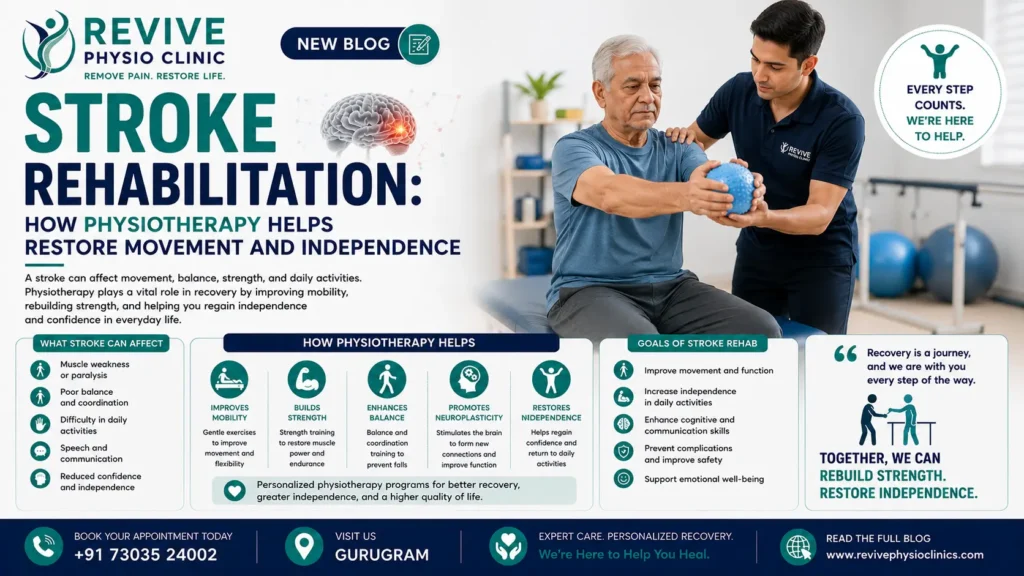
A stroke can have a significant impact on a person’s movement, strength, balance, coordination, and ability to perform everyday activities. Recovery can be different for every individual, depending on the type and severity of the stroke and the areas of the brain affected.
Physiotherapy plays an important role in stroke rehabilitation by helping individuals improve mobility, strength, balance, and functional independence through a structured and personalized rehabilitation program.
At Revive Physio Clinic, we provide individualized neurological physiotherapy programs designed to support patients throughout their recovery journey.
What Happens After a Stroke?
A stroke can affect the communication between the brain and different parts of the body. Depending on the area affected, a person may experience changes in:
- Muscle strength
- Movement and coordination
- Balance
- Walking ability
- Sensation
- Hand and arm function
- Postural control
- Ability to perform daily activities
Some people experience weakness or paralysis on one side of the body, while others may have difficulties with coordination or balance.
Recovery requires appropriate medical care and a rehabilitation plan tailored to the individual’s needs.
The Role of Physiotherapy in Stroke Rehabilitation
Physiotherapy focuses on helping individuals regain as much physical function and independence as possible.
Following a detailed assessment, a physiotherapist may develop a rehabilitation program that includes:
- Range-of-motion exercises
- Muscle strengthening
- Balance training
- Sitting and standing practice
- Walking and gait training
- Coordination exercises
- Functional movement training
- Postural control exercises
- Task-specific rehabilitation
- Home exercise guidance
The program is adjusted based on the patient’s progress and functional goals.
Improving Mobility After a Stroke
Many stroke survivors experience difficulty with walking and other movements. Physiotherapy can help improve:
- Standing balance
- Weight shifting
- Leg strength
- Walking patterns
- Confidence during movement
- Ability to transfer from sitting to standing
Rehabilitation often progresses gradually, focusing first on safe movement and then increasing the level of physical activity as appropriate.
The Importance of Balance Training
Balance problems are common after a stroke and can increase the risk of falls.
A physiotherapy program may include exercises that improve:
- Static balance
- Dynamic balance
- Weight distribution
- Coordination
- Body awareness
- Walking stability
Balance exercises are selected according to the person’s current abilities and should be performed under appropriate supervision when necessary.
Strength and Functional Training
Weakness can make daily tasks difficult after a stroke. A structured strengthening and functional training program can help patients work toward activities such as:
- Getting out of bed
- Standing from a chair
- Walking safely
- Climbing stairs
- Reaching and using the affected arm
- Improving overall endurance
The focus is on meaningful activities that support greater independence in daily life.
Can Physiotherapy Help During Long-Term Stroke Recovery?
Rehabilitation is not limited to the early stages after a stroke. Some individuals may continue to benefit from ongoing exercise, movement training, and functional rehabilitation over time.
Progress depends on many factors, including the individual’s condition, consistency with rehabilitation, overall health, and personal recovery goals.
A physiotherapist can reassess progress and modify the program as the person’s abilities change.
The Importance of Family Support
Family members and caregivers can play an important role in the rehabilitation process. They may support the patient by:
- Encouraging regular participation in rehabilitation
- Creating a safe environment
- Supporting prescribed home exercises
- Helping maintain a consistent routine
- Encouraging independence where appropriate
Caregiver education can also help ensure that movement and transfers are performed safely.
When Should Stroke Rehabilitation Begin?
The timing of rehabilitation depends on the individual’s medical condition and the recommendations of the treating medical team. Once medically appropriate, rehabilitation can begin with activities suited to the person’s current abilities.
Early and continued rehabilitation may help support recovery and reduce complications associated with prolonged immobility.
Why Choose Revive Physio Clinic?
At Revive Physio Clinic, we understand that every stroke recovery journey is unique. Our physiotherapists assess each patient’s mobility, strength, balance, and functional needs before developing an individualized rehabilitation plan.
Our approach focuses on helping patients:
- Improve mobility
- Build strength
- Improve balance and coordination
- Increase confidence with movement
- Work toward greater independence in daily activities
We support patients and their families throughout the rehabilitation process with personalized guidance and structured treatment.
Take the Next Step Toward Recovery
Stroke recovery can take time, patience, and consistent rehabilitation. A personalized physiotherapy program can help individuals work toward improved movement, function, and independence.
If you or a loved one is recovering from a stroke, consult Revive Physio Clinic for a professional physiotherapy assessment and personalized rehabilitation support.
Book Your Consultation Today
📞 Call: +91 73035 24002
🌐 Website: www.revivephysioclinics.com
📍 Location: Gurugram
